The Problem With Signals on a Phone
Signal trading on a phone has a workflow problem that desktop traders never face: you only have one screen. The signal arrives in one app — a Telegram group, a separate signals app — and the broker is in another. By the time you have switched apps, found the pair and set the expiry, a 1-minute entry window is mostly gone.
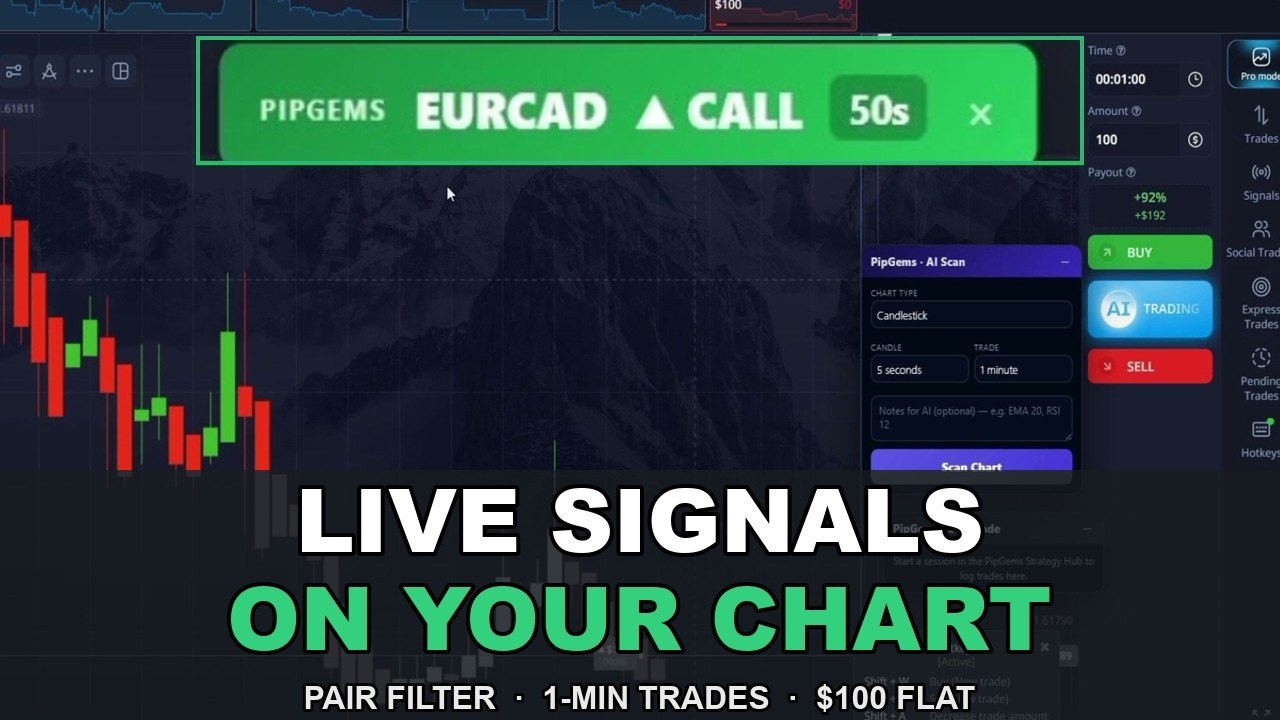
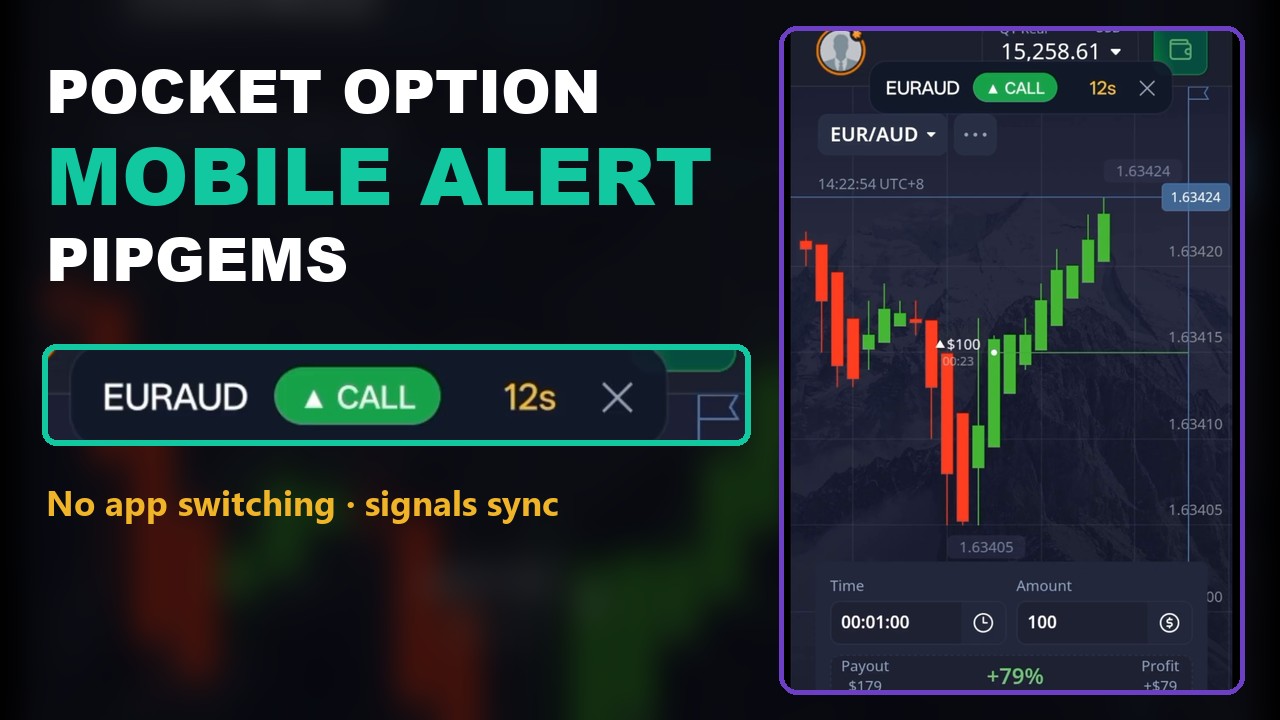
This session solves it a different way: the signal floats on top of the Pocket Option app itself. A small banner appears over whatever you are looking at, with the pair, the direction and a countdown ticking down. Nothing to switch to. You read it and you act on the chart already in front of you.
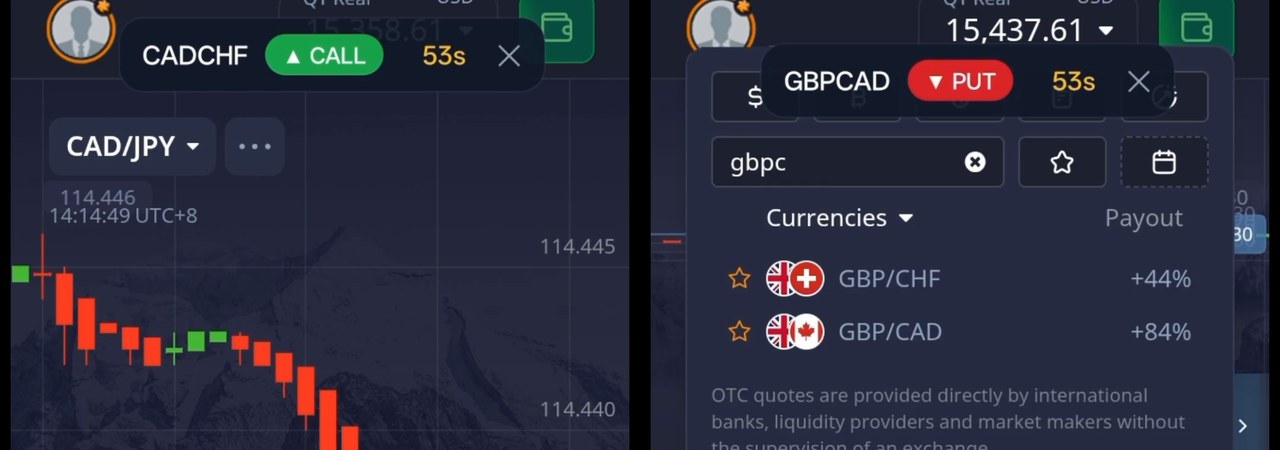
The banner carries exactly three things, which is the right amount for a phone:
- The pair — CADCHF, GBPCAD, EURAUD, GBPJPY in this session
- The direction — a green CALL or a red PUT
- A countdown — how many seconds the entry window has left
That countdown is the part that matters most. A signal with 53 seconds left is a trade you can still think about. One with 2 seconds left is not a trade at all — and seeing that number is what stops you taking it. Most signal setups leave you guessing how stale the alert is.
The Setup
- Platform: Pocket Option, mobile app
- Signals: PipGems, running as a floating overlay on the same phone
- Trade duration: 1 minute
- Stake: flat $100 on every entry
- Pairs traded: CAD/CHF, GBP/CAD, EUR/AUD, GBP/JPY — all live-market, no OTC
The Pair Filter — Two Rules, Not One
Before a single trade, the asset list gets filtered. Two separate rules are doing the work, and they pull in opposite directions.
Rule 1: no OTC pairs — and it costs you
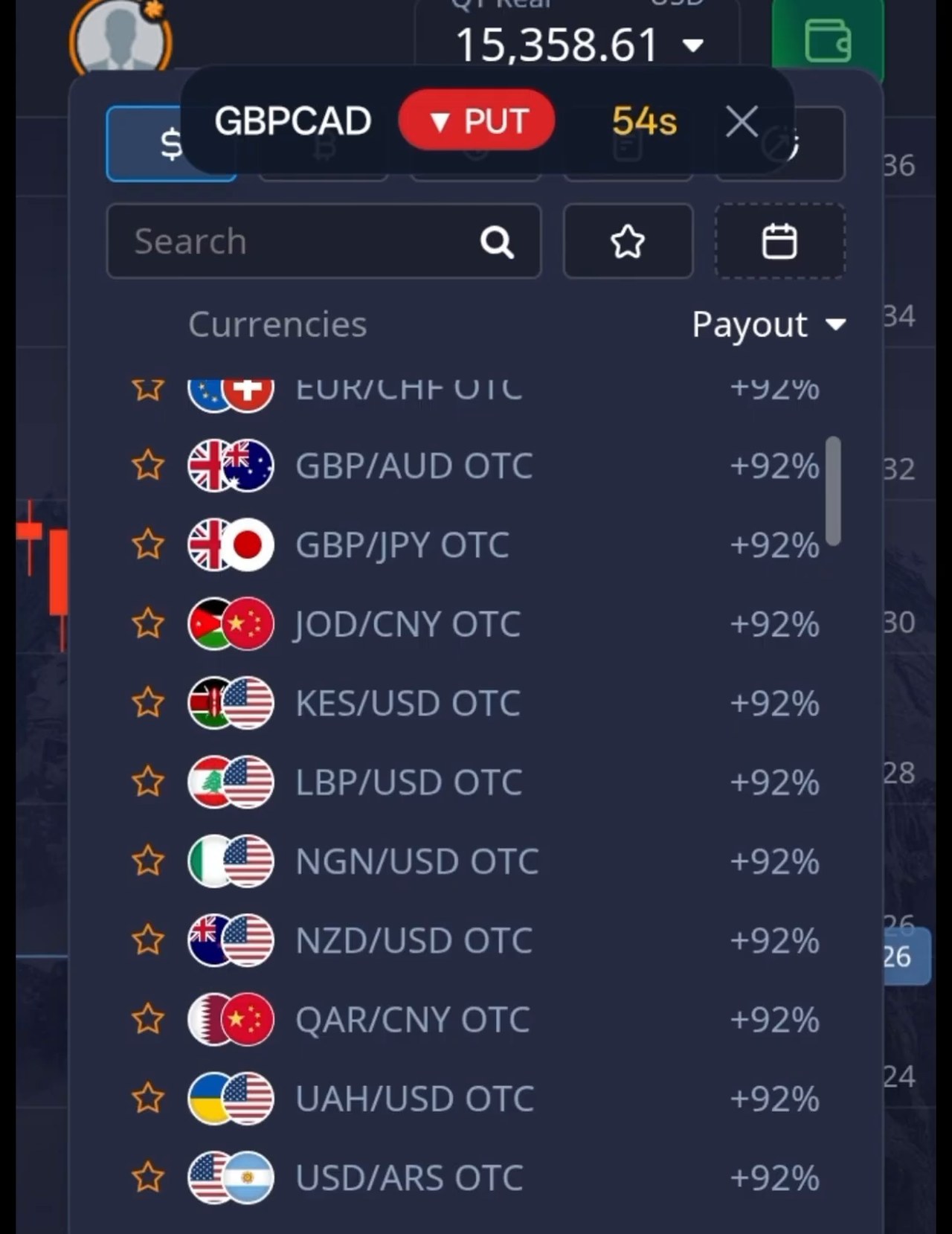
Look at what the asset list is offering: a wall of OTC pairs at +92%. Meanwhile the live-market pairs actually traded in this session paid +84% (GBP/CAD), +87% (GBP/JPY) and +79% (EUR/AUD).
So avoiding OTC is not free — it costs 5 to 13 percentage points of payout. That is the honest version of this rule, and almost nobody states it. You are deliberately choosing the lower-paying asset.
The reason is that the signals are computed from the live interbank market. An OTC pair is the broker's own synthetic quote, used when the real market is thin or closed. It carries the same name and looks like the same chart, but it does not follow the same price. A signal calculated on the real EUR/AUD has no relationship to what EUR/AUD OTC is doing — so trading it there converts a real signal into a random one. A 92% payout on a random entry is worth less than 79% on a valid one. Our full write-up on the non-OTC rule goes deeper on why the two price feeds diverge.
Rule 2: drop the low-payout pairs
The second filter is pure arithmetic. In the same asset list, GBP/CHF was offering +44%. At a 44% payout, break-even sits at about a 69% win rate — you would need to win roughly seven trades in ten just to stand still. At 84%, break-even is about 54%.
That is the whole argument for the filter. The same signal quality produces a completely different outcome depending on which pair you take it on, so the low-payout pairs come off the list entirely and never generate an alert.
The Session, Honestly
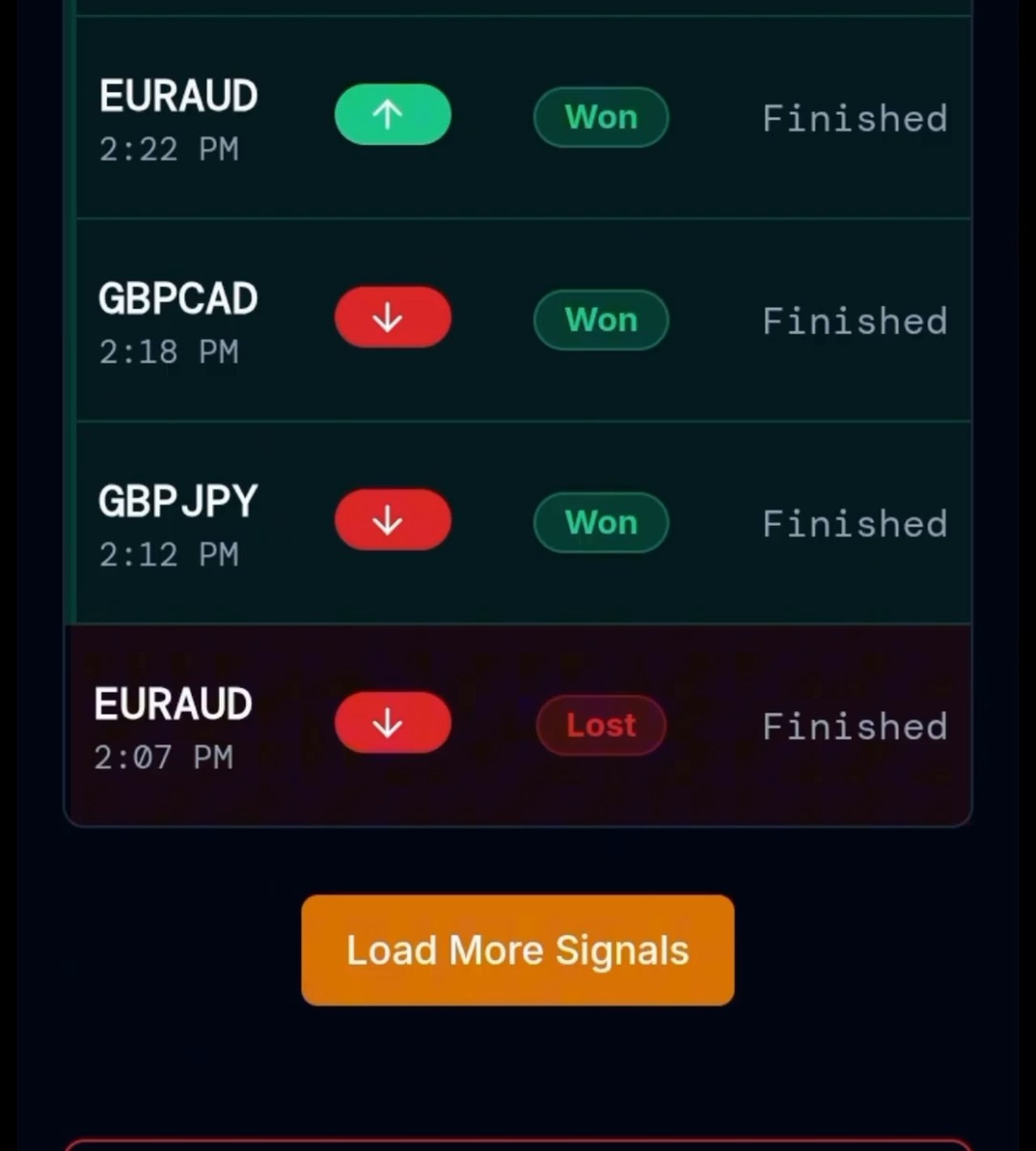
The signal log for this stretch shows five settled signals: four won, one lost — GBPCAD, EURAUD, GBPCAD and GBPJPY green, EURAUD at 2:07 PM red. At a flat $100 and payouts in the 79–87% band, that is a profitable stretch, and it is shown with the loss in the list rather than cropped out.
Two things belong beside that number:
- Five signals is a sample of five. It shows the workflow working, not an edge. Break-even at these payouts is around 54%, so 4/5 clears it comfortably — and a run of five means very little either way. The log across weeks is the evidence.
- The log scores the signal, not your ticket. Its win/loss marks track each signal against its own timing. Your result depends on when you actually entered — take a 1-minute signal with 8 seconds left on the countdown and you are in a different trade than the one being scored.
Watch the Full Session
The overlay setup, the pair filtering, and every entry as it happens:
Honest Weaknesses
- An overlay needs permission, and it sits on your screen. Android has to allow drawing over other apps. It is a small banner, but it is a banner on your chart.
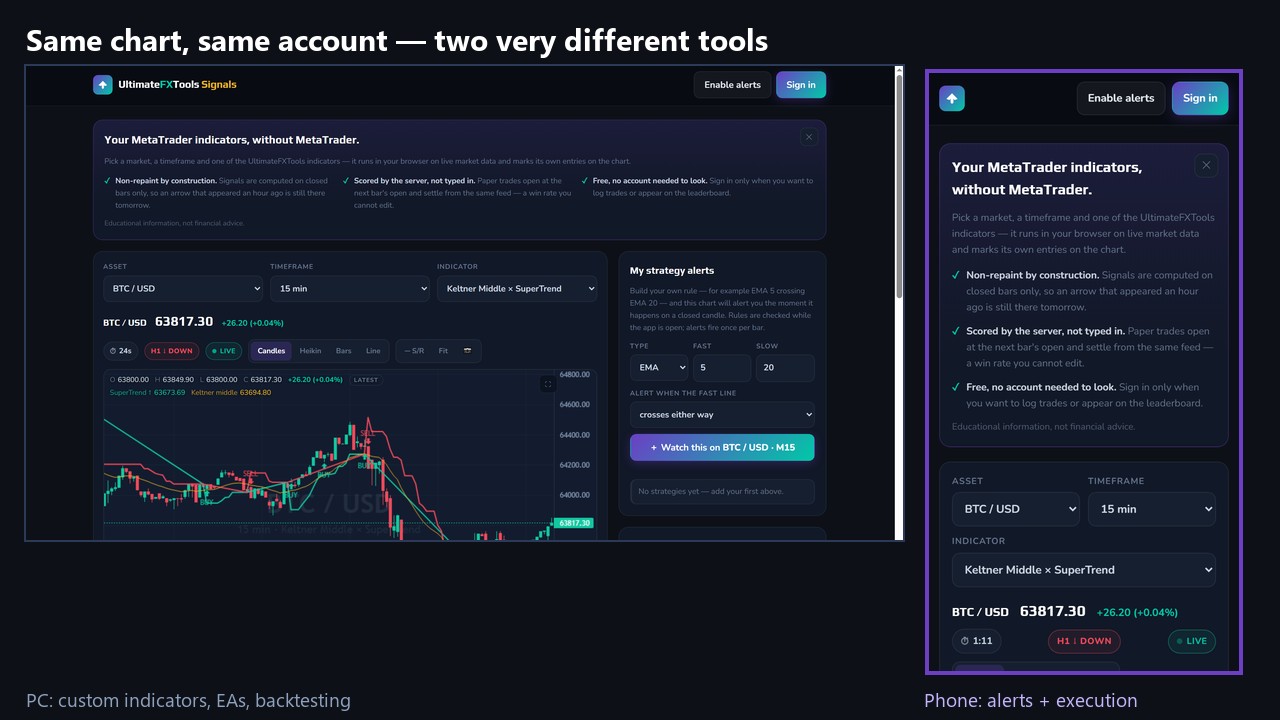
- One screen is still one screen. The overlay removes the app switch, not the fact that a phone shows you far less chart than a desktop — which is a real limit when you want to check context before taking a signal. See our phone vs PC breakdown for where that line sits.
- 1-minute expiries punish hesitation. The countdown exists because a signal taken late is a different trade. If you cannot act within a few seconds, longer expiries suit this better.
- Filtering shrinks the opportunity set. Dropping OTC and low-payout pairs is correct, and it also means fewer alerts and quiet stretches. That is the cost of the rule, and it is worth paying.
- Weekends are OTC-only. When the live market is closed there are no valid pairs to trade under this rule at all. Trading anyway is exactly the mistake the rule exists to prevent.
Risk Management Rules
- Flat stake, fixed before the session. The $100 never moves. Never raise it to recover a loss — each trade is independent, and doubling only makes a cold streak more expensive.
- Know the break-even before you enter. At 84% payout you need ~54%; at 44% you need ~69%. The payout is shown on screen before every trade, so there is no excuse for not checking.
- Respect the countdown. If a banner is nearly expired, let it go. A skipped signal costs nothing.
- Cap the session with a trade count or a daily loss limit, and honour it.
- Demo first until reacting to a banner within a few seconds is routine. Full framework in the risk and trade management guide.
The Verdict
A strong 4.5 out of 5. What earns it: the overlay genuinely solves the one-screen problem that makes mobile signal trading frustrating, and the countdown turns "is this still valid?" from a guess into a number. The pair filter is disciplined in a way most signal setups leave to willpower — and the OTC rule is enforced even though it means accepting a lower payout, which is the opposite of what a service optimising for appearances would do. The session is shown with its loss in the log.
The missing half star is the phone itself. The overlay removes the app switch but not the small screen, entries are unforgiving at one minute, and your results will track how selectively you act on the banners rather than what the feed sends. As a workflow for trading signals from a phone, it is the cleanest we have run; five trades remain a story, and the log over weeks is what counts.
#PocketOption #PipGems #MobileTrading #TradingSignals #1MinuteTrades #BinaryOptions #SignalOverlay #NonOTC
Frequently Asked Questions
What is a floating signal overlay?
A small banner that draws on top of whatever app is on screen. Here the PipGems signal - pair, direction and a countdown showing how many seconds the entry window has left - appears over the Pocket Option app itself, so there is no switching between a signals app and the broker.
Why avoid OTC pairs when the payout is higher?
OTC pairs in this session paid 92% while the live-market pairs traded paid 79 to 87%, so avoiding OTC costs 5 to 13 percentage points of payout. It is still correct: the signals are computed from the live interbank market, and an OTC pair is the broker's own synthetic quote that does not follow the same price. A 92% payout on an entry the signal does not describe is worth less than 79% on a valid one.
Why filter out low-payout pairs?
Because the payout sets your break-even. At an 84% payout break-even is about a 54% win rate; at the 44% payout offered on one pair in this session it rises to about 69%. The same signal quality produces a very different outcome depending on the pair, so the low-payout assets are removed from the alert list entirely.
What did the session actually produce?
Five settled signals in the visible log: four won and one lost, at a flat 100 dollar stake with payouts in the 79 to 87 percent band. Five trades is a sample of five - it demonstrates the workflow rather than proving an edge, and break-even at these payouts sits near 54 percent.
This content is for educational purposes only and is not financial advice. Trading involves substantial risk; you can lose some or all of your capital. No result is guaranteed and past performance does not indicate future results. Trade only what you can afford to lose.
More on this setup: the non-OTC rule explained in full, the desktop browser extension that does the same job on a PC, or what PipGems is if you are starting from scratch.