Quotex 1 Minute Strategy
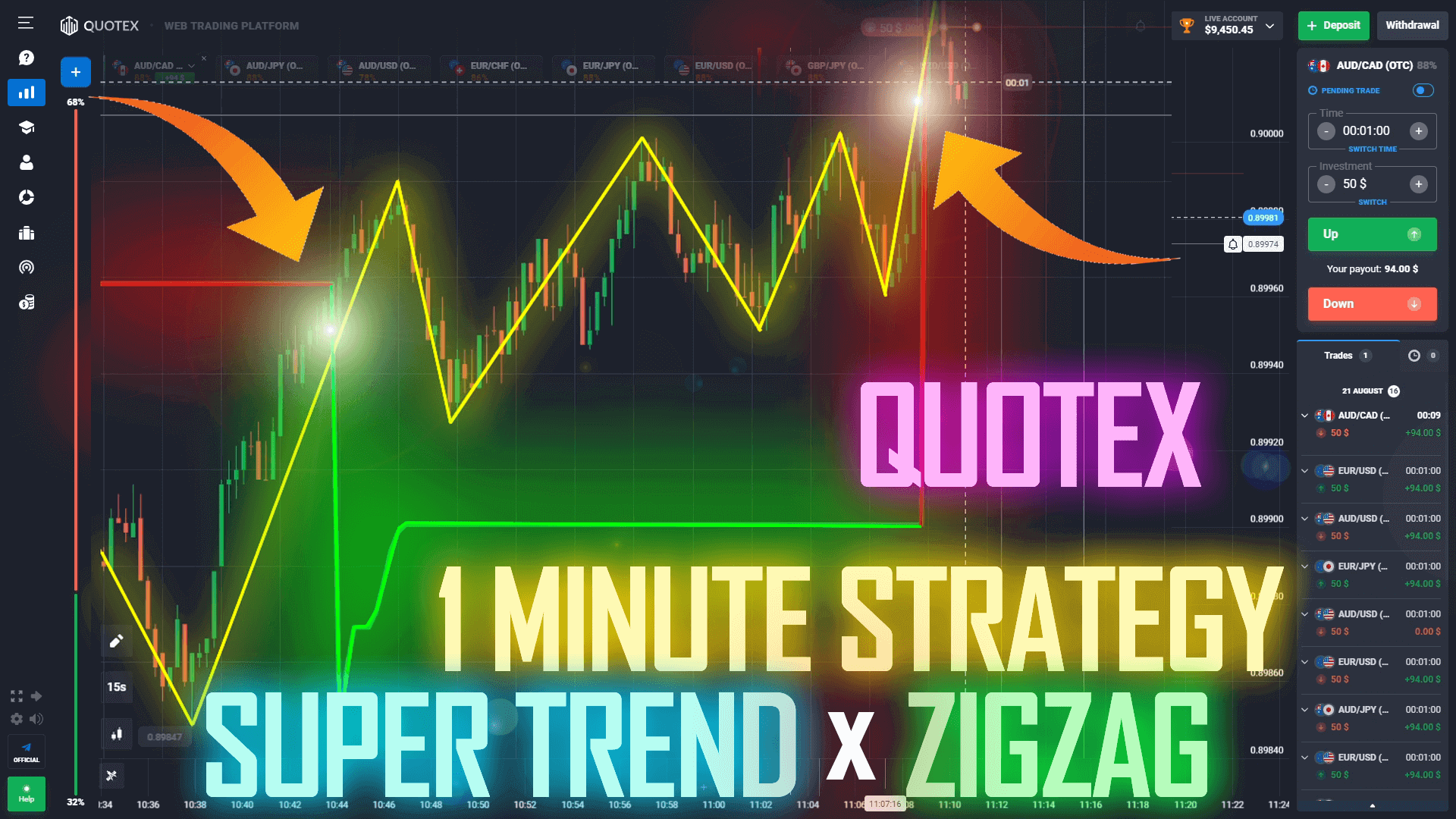
This Quotex 1-minute setup pairs two well-known tools — the Super Trend indicator and the Zigzag indicator — to read short-term direction on the OTC and standard charts. It is a simple, visual approach that beginners can follow, but the 1-minute timeframe is fast and high-variance: signals appear and expire quickly, and noise on a single candle can trigger false readings. Treat it as a framework to study, not a shortcut, and always test on a demo account first.
Quotex – One Minute Trading
Plenty of strategies exist for 1-minute trading. Moving averages, RSI, and Parabolic SAR are among the most common starting points. This method leans on trend confirmation instead, combining a trend filter with a swing-detection line so you are not acting on a single indicator alone. It can also sit on top of an existing routine as a secondary confirmation layer.

What The Strategy Uses
Super Trend Indicator
The Super Trend is a trend-following overlay built from price and volatility (an ATR-based band). It plots below price and turns green when momentum leans upward, and flips above price and turns red when momentum leans downward. On a 1-minute chart it helps you avoid trading against the immediate direction, though during sideways or choppy conditions it will flip back and forth and produce weak signals.

Zigzag Indicator
The Zigzag filters out minor price moves and connects the significant swing highs and lows with straight lines. It is a lagging, visual tool — it helps you see structure, support and resistance zones, and where sentiment shifted — but it repaints as new swings form, so never treat the most recent leg as a finished signal.

Settings, Timeframe & Entry Rules
Apply both indicators to the 1-minute chart and keep the default or lightly tuned settings while you learn how they behave together. A basic reading of the setup:
- Timeframe: 1-minute candles; expiry typically kept close to the candle length.
- Up bias: Super Trend green (below price) and Zigzag printing higher swing lows.
- Down bias: Super Trend red (above price) and Zigzag printing lower swing highs.
- Wait for agreement: only consider a trade when both tools point the same way; skip the setup when they disagree or the market is flat.
You can compare this against the double-filter variation in our 2x double Super Trend Quotex strategy, or see how the swing line works on faster charts in the 30-second OTC Zigzag strategy. New to the platform? Start with our beginner Quotex guide first.
Realistic Expectations
No indicator combination predicts the market, and both of these tools lag price by design. On a 1-minute chart, spreads, sudden volatility, and news can invalidate a clean-looking signal within seconds. Some sessions will produce several agreeing setups; others will offer nothing worth taking. The goal is consistency in how you follow the rules, not chasing every candle.
Risk Management
Risk control matters more on fast timeframes than the entry signal itself. Keep each trade to a small, fixed fraction of your balance, set a daily loss limit, and stop for the session once you hit it. Do not use a martingale (doubling stake after a loss) — on a high-variance 1-minute chart a short losing streak can wipe an account quickly. Practice on a demo account until the setup feels routine before risking real funds, and only ever trade money you can afford to lose.
Quotex OTC Strategy Video
Frequently Asked Questions
Does this strategy win every trade?
No. No strategy wins every trade, and the 1-minute timeframe is especially high-variance. The Super Trend and Zigzag are lagging tools that help you read direction — they do not guarantee any outcome. Expect losing trades and manage risk accordingly.
What platform does this use?
Quotex is a web-based trading platform for digital options, CFDs, OTC assets, and crypto. Its interface is beginner-friendly, which makes it a convenient place to practice indicator-based setups on a demo account before committing real money.
Can I get the indicators?
The Super Trend and Zigzag are widely available, and our full library of custom MT4/MT5 indicators and strategy guides is included with $39 lifetime access. It is a one-time payment with no subscription.
This content is for educational purposes only and is not financial advice. Trading involves substantial risk; you can lose some or all of your capital. No result is guaranteed and past performance does not indicate future results. Trade only what you can afford to lose.