Expert Option Trading Tricks
Search for "Expert Option tricks" and you will find endless promises of secret buttons, hidden patterns, and shortcuts that supposedly beat the platform. Be blunt about this from the start: there are no tricks that let you consistently outsmart a trading platform. Prices move on real supply and demand, every outcome carries risk, and no sequence of clicks changes the odds in your favour. What separates disciplined traders from the rest is not a trick at all - it is a set of honest habits around preparation, confirmation, and risk. This guide reframes the popular "tricks" as those habits.
Why There Are No Shortcuts
Short-term option trading is close to a coin flip on any single trade, and the payout structure is designed with a house edge in mind. Anyone selling you a guaranteed method is selling a story, not a strategy. Bots that claim to read the market perfectly, "no-loss" recovery systems, and signal groups promising certainty all rely on the same false premise: that the future can be predicted. It cannot. Accepting this is freeing, because it moves your focus toward the things you can control: which setups you take, how you confirm them, and how much you risk.
It is also worth noting that binary options are banned for retail traders in the EU and UK by regulators such as ESMA and the FCA. If you trade this style of product, understand the rules in your region and treat it as high-risk speculation, not investment.
Honest Tips That Actually Help
None of the following are secrets - just the unglamorous fundamentals experienced traders return to.
- Trade one setup you understand. A single, well-defined pattern you can recognise instantly beats ten indicators you half-understand. Simplicity keeps you objective under pressure.
- Wait for confirmation. Rather than reacting to the first candle, let price confirm your read - a break and retest, a rejection at a level, or agreement between two signals such as trend direction and momentum.
- Respect the session. Volatility differs between market hours and quieter OTC periods. Know which conditions your setup was built for and sit out the rest.
- Keep a journal. Recording why you entered, not just the result, is how you turn random trades into a repeatable process and spot your own bad habits.
Entry Discipline
Most avoidable losses come from entries, not exits. A clean checklist - is the trend clear, is there a level nearby, is momentum agreeing, is the timing right - filters out impulsive trades. A charting package such as MetaTrader 4 & 5 gives you free charts and indicators to define your levels, and a custom indicator like our Smart Trade tool can help highlight potential entry, exit, and reversal zones. Treat any indicator as a second opinion that must agree with your own read, never as an autopilot - it reduces guesswork, it does not remove risk.
Realistic Expectations
A sustainable approach expects losing trades as a normal part of the process. The goal is not to win every trade - no method does that - but to trade a defined edge consistently, keep losses small, and let discipline compound over many trades. If a strategy only works when you never lose, it is not a strategy.
Risk Management
Risk management is the one area where you have full control, so it deserves more attention than any entry signal. A few durable rules:
- Fixed small stakes. Risk only a small, consistent percentage of your account per trade so no single loss - or losing streak - can do serious damage.
- Avoid martingale. Doubling your stake after a loss to "recover" is one of the fastest ways to wipe an account. A few consecutive losses, which are entirely normal, can escalate the stake beyond what you can afford. Treat martingale as a warning sign, not a system.
- Set a daily stop. Decide in advance how much you are willing to lose in a day, and walk away when you hit it. Protecting your capital matters more than chasing one more trade.
- Never trade money you need. Only risk capital you can genuinely afford to lose.
FAQ
Are there Expert Option tricks that guarantee wins?
No. There is no trick, bot, or setting that guarantees a winning trade or beats the platform over time. Any product promising certainty is misleading you. Consistency comes from discipline and risk control, not from a shortcut.
Do indicators improve my trading?
They can help you stay objective and structure your decisions, but only when combined with your own analysis and a firm risk plan. An indicator organises information; it does not predict the future or remove risk.
Is a paid tool worth it for a beginner?
A tool is only useful once you understand the setup behind it. If you want a full library of indicators and strategies to study, our $39 lifetime access covers the collection, but learn the fundamentals first - no purchase replaces practice and discipline.
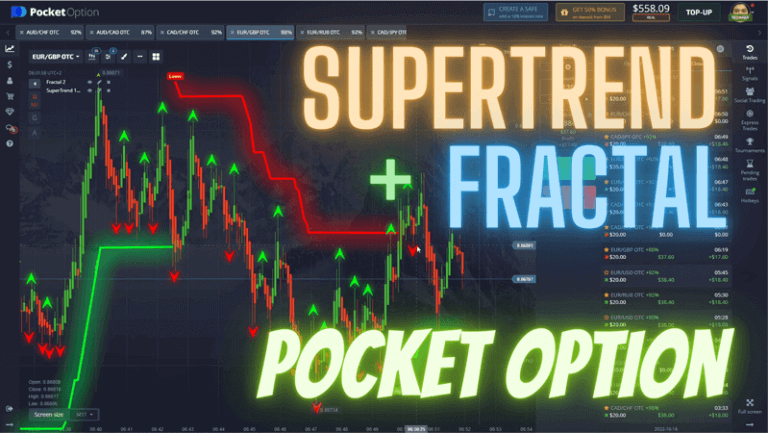
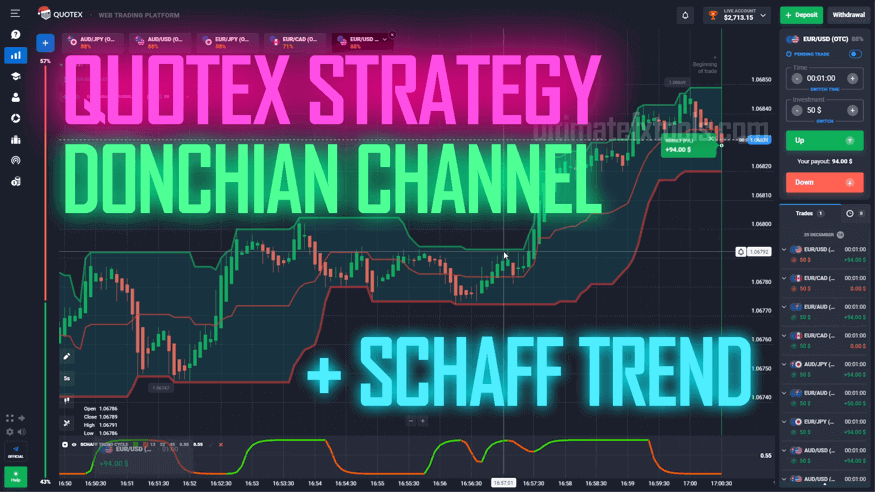
To practise this same discipline on defined setups, see our Pocket Option Super Trend strategy and the Quotex Donchian Channel and Schaff Trend Cycle approach.
This content is for educational purposes only and is not financial advice. Trading involves substantial risk; you can lose some or all of your capital. No result is guaranteed and past performance does not indicate future results. Trade only what you can afford to lose.